
I Hoped I Was Wrong
I Believed It Completely
Intelligence is just a matter of pattern recognition.
I wasn't just thinking about it anymore. I was presenting it. I even won a government award for it. I believed it completely.

Right around the time I thought I had it all figured out.
Around the same time, I was reading Carl Sagan's Cosmos.
Sagan tells the story of how science kept making us smaller. Copernicus showed Earth isn't the center of anything. Darwin showed we're just another animal. Hubble showed our galaxy is one of billions, floating in emptiness so large it makes everything we've ever known invisible.
Every few centuries, we find out we're less special than we thought.
From Sagan I ended up reading Richard Dawkins. Dawkins is a biologist who wrote The God Delusion and became one of the most famous atheists in the world. His argument is blunt: there is no God. No designer. No one behind the curtain. Everything from bacteria to galaxies, explained by natural processes. No creator required.
That hit different when I combined it with my own theory.
I walked home from the library that night. To get to my place I went through a tunnel behind the back gate of Ewha. Long, concrete, dim. At that hour, nobody else was in it. Just my footsteps echoing off the walls.
If Dawkins is right, and there's no creator, and intelligence is just patterns that evolved for survival, then I'm a byproduct. Not designed. Not intended. I exist because ancestors kept not dying long enough to reproduce. That's the whole story.
I kept walking.
I'd always been someone who needed a reason. A reason to study until 2 AM. A reason to keep going when nothing was working. But science doesn't hand you reasons. It hands you mechanisms.
Someone in my family was sick at the time. I couldn't fix it from there. I couldn't fix any of it. And Dawkins was telling me maybe there was no reason to. Just atoms doing what atoms do. It is what it is.
I'd been an atheist for years. No God, fine. I could live with that. But no reason? You can live without a creator. Living without a cause is harder.
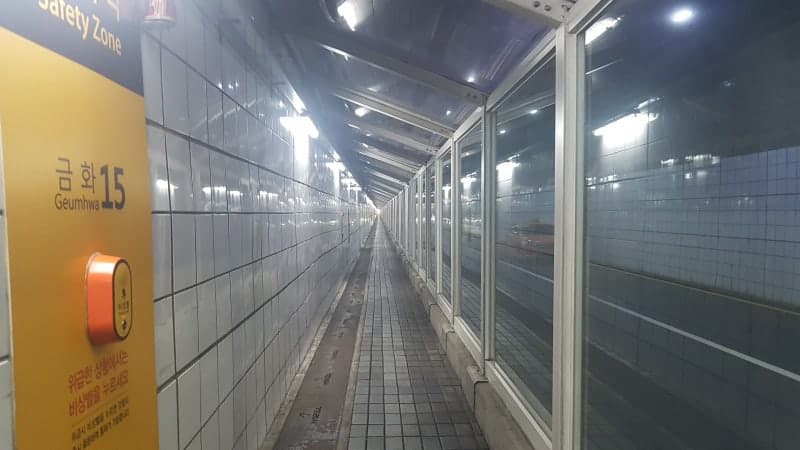
Geumhwa Tunnel, between Sinchon and the back gate of Ewha. Did a lot of thinking in here.
Judea Pearl, a computer scientist who'd won the Turing Award for his work on causation, had spent his career on that exact question: what causes a pattern to exist? And he had a way of making it impossible to ignore.
Here's how he put it. Imagine you've watched every sunrise for 30 years. You can predict exactly when the sun will come up tomorrow, down to the minute. Pattern recognition at its finest.
But do you understand why the sun rises?
Pearl's answer was uncomfortable: pattern recognition captures correlations. This tends to follow that. But it misses causes entirely. You can watch a million sunrises and never figure out that the Earth rotates.
Real intelligence, he argued, needs a model of how the world actually works. Not just what tends to happen next.
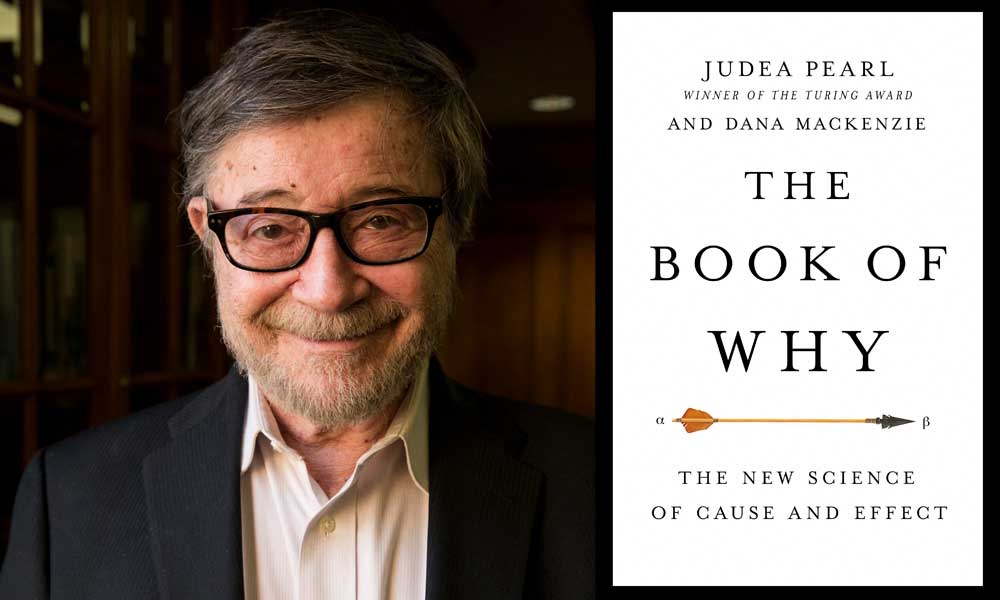
Judea Pearl. Turing Award winner. Wrote an entire book called The Book of Why. I wish he hadn't.
I sat with that. Because Pearl wasn't describing a general problem. He was describing me.
I'd noticed the same thing happening across law, language, lifting, math. I'd called it a theory. But had I understood anything? Or had I just spotted a correlation across my own experiences and called it an answer?
OK. So maybe pattern recognition isn't the whole story. It explains most of intelligence, but not all. I could live with that.
But there was a quieter question underneath. Even if pattern recognition explains how we learn, it says nothing about why. Why did I stay at my desk until 2 AM? Why did I pull hundreds of immigration files no one asked me to? The theory explains the engine. It doesn't explain what turns the key.
And underneath even that: if we're just pattern recognition machines, why are we here at all? I wanted there to be a reason. Without one, it was just hard to stand.
I'd taken a lot of economics classes. The whole field stands on one assumption: people are rational. We weigh costs and benefits, calculate expected value, choose the best option.
I never fully bought it. People do irrational things every day. But I figured when it really matters, a career move, a big investment, a life-changing bet, we snap into something colder. Override the gut. Calculate.
Daniel Kahneman spent decades proving we barely do this at all.
Most of our thinking, he found, is fast. Automatic. You see a face and know it's angry before you can say why. Pattern recognition, obviously. He called it System 1.
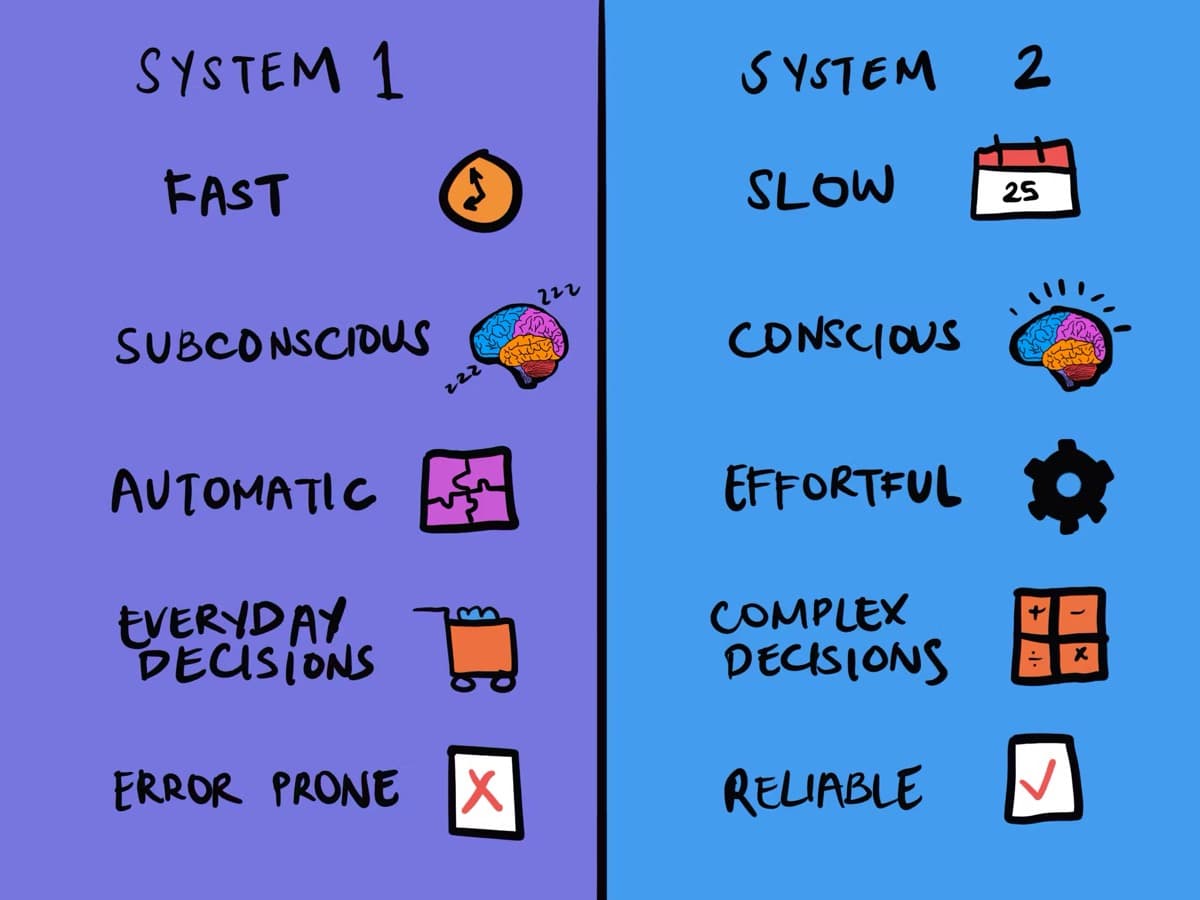
System 1 runs your life. System 2 thinks it does.
But System 2 was different. The slow, deliberate kind. The difference between breathing and holding your breath. One just happens. The other, you feel every second.
If pattern recognition runs almost everything, fine. But what about those moments when it can't help you? When you have to force yourself through logic step by step, resisting every shortcut? That didn't feel like matching. That felt like building.
Karl Friston pushed it further. Your brain isn't sitting around waiting for patterns, he argued. It's constantly guessing. When someone says "Happy Birth" your brain has already finished "day to you" before the sound hits your ears. Not a pattern matcher. A prediction engine.
Three serious people. Three different angles. All saying the same thing: you're oversimplifying.
I couldn't find a hole in any of it. I needed one.
Pearl's challenge kept circling back. To even see an apple, you need to already know what an "object" is. What "space" is. What "separate from background" means. Nobody teaches a baby these things. They arrive knowing.
Immanuel Kant made this argument over two centuries ago. He called it a priori knowledge: concepts that exist before experience. Not learned. Not earned through practice. Just there from the start. Built in.
If that's true, then pattern recognition can't be the bottom floor. Something else is underneath it. Something that pattern recognition needs in order to even get started.
I went back and forth on this for weeks. The same question surfacing at odd moments. Showering. Lying in bed not sleeping. Is there a floor beneath the floor?
I was taking biology classes at the time and picked up Jerry Coyne's Why Evolution Is True. I expected theory. What I got was evidence I could see.
Fruit flies growing new wings in a lab. Not over millions of years. Over weeks. Humans still walking around with tailbones from when we had tails. Muscles built to rotate ears we can't rotate anymore.
I kept underlining. Kept googling the images. Every page said the same thing: we weren't designed. We were assembled from whatever survived long enough to reproduce.
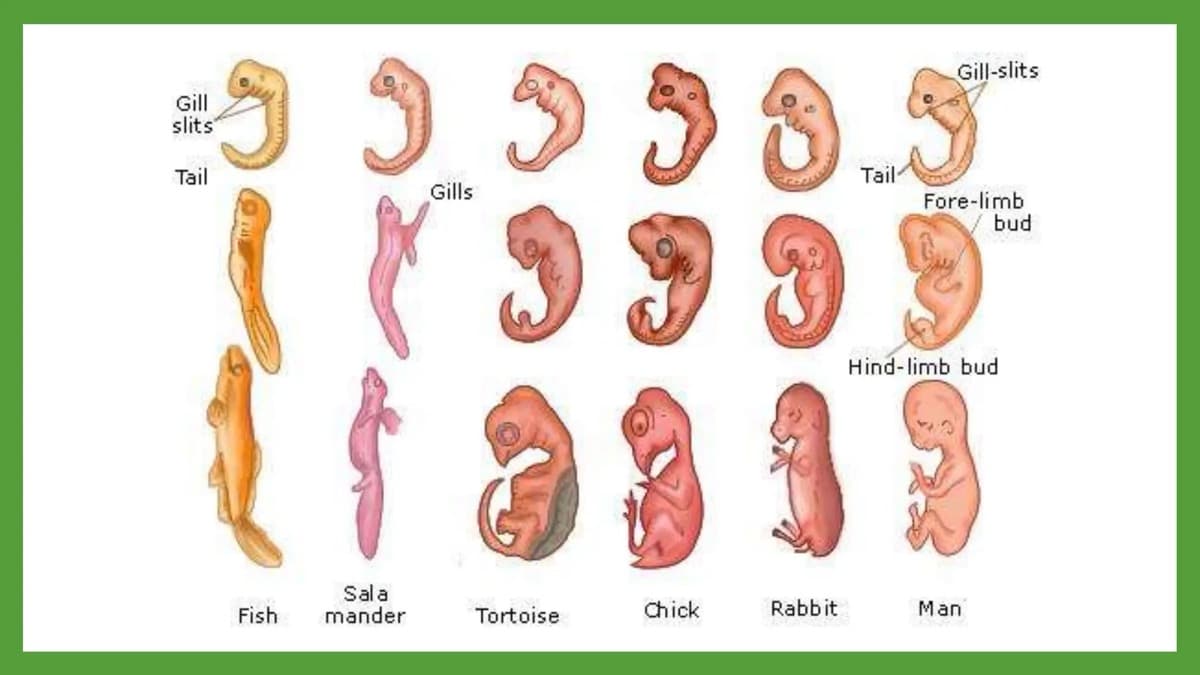
Six different species. Same starting point. Evolution's rough draft.
Then one night, it flipped.
What if Kant was right that the knowledge is there before experience, but wrong about where it comes from?
What if those concepts aren't pre-installed by some mysterious force? What if they're pattern recognition too, just not mine?
Think about what came before you. Not your parents. Go further back. Millions of years of organisms, living and dying, every single day.
They encountered space every day. Time every day. Solid objects every day. The organisms that couldn't tell a rock from the ground didn't survive long enough to have children. The ones that could, passed on brains slightly better at grasping what "space" means, what "object" means, what "separate from background" means.
Now do that for a few million generations.
Eventually those patterns don't need to be learned anymore. They've been repeated so many times, across so many lifetimes, that they stop being software and become hardware. Your brain doesn't need to learn what "object" means because a hundred million generations already learned it for you.
That's what Kant was seeing. He was right that the knowledge comes before experience. But it's not magic. It's not a mystery. It's pattern recognition that happened before you were born.
They look innate. They feel innate. But they're patterns all the way down. Just very, very old ones.
I didn't arrive here through textbooks or TED talks. I arrived here through immigration files I couldn't explain, English that came out before I could think, and a barbell my body knew how to lift without being taught. The reading came later. The experts sharpened some edges, challenged others. But the experiences kept pointing the same way.
I could be wrong. But I don't think I am.
Intelligence is patterns. All the way down. From the first organism that flinched at a shadow to the machine that taught itself Go.
I believe that now. But I still think about the kid at his desk at 2 AM. If intelligence is all patterns, why did it come so easy to some kids and not to me?
The answer isn't about who sees patterns. Everything alive sees patterns. It's about how deep you go.
And what pulls you deeper.